
They wanted to marry
Clara Wieck and Robert Schumann were in love. Clara was already a celebrated pianist and a composer; Robert had studied with her father, the piano teacher Friedrich Wieck. But Wieck opposed their marriage and, in 1836, forbade further meetings. The couple became secretly engaged the following year. Schumann-Portal traces these events in Clara’s chronology.
Letters kept them connected while they were apart. Their future together, however, required more than a promise.
A case before the court
In 1839, Clara and Robert applied to the court in Leipzig for permission to marry without her father’s consent. The surviving case file names both of them as parties against Friedrich Wieck and dates from 1839–1840. View the record at the Saxon State Archives.
The court granted permission in 1840. On 12 September 1840, Clara and Robert married in Schönefeld, near Leipzig, one day before Clara’s twenty-first birthday. Clara’s chronology records the marriage.
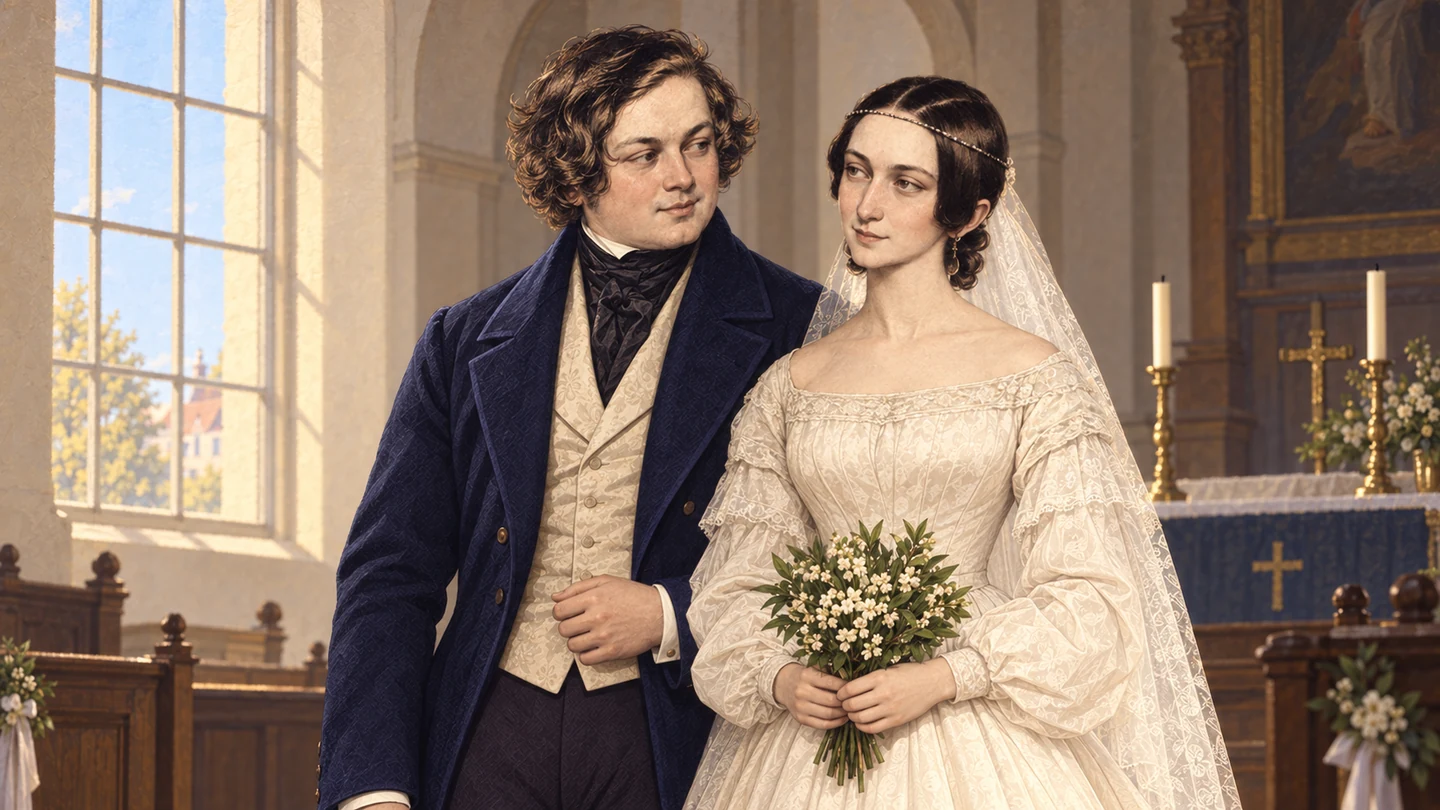
Twenty-six songs in red velvet
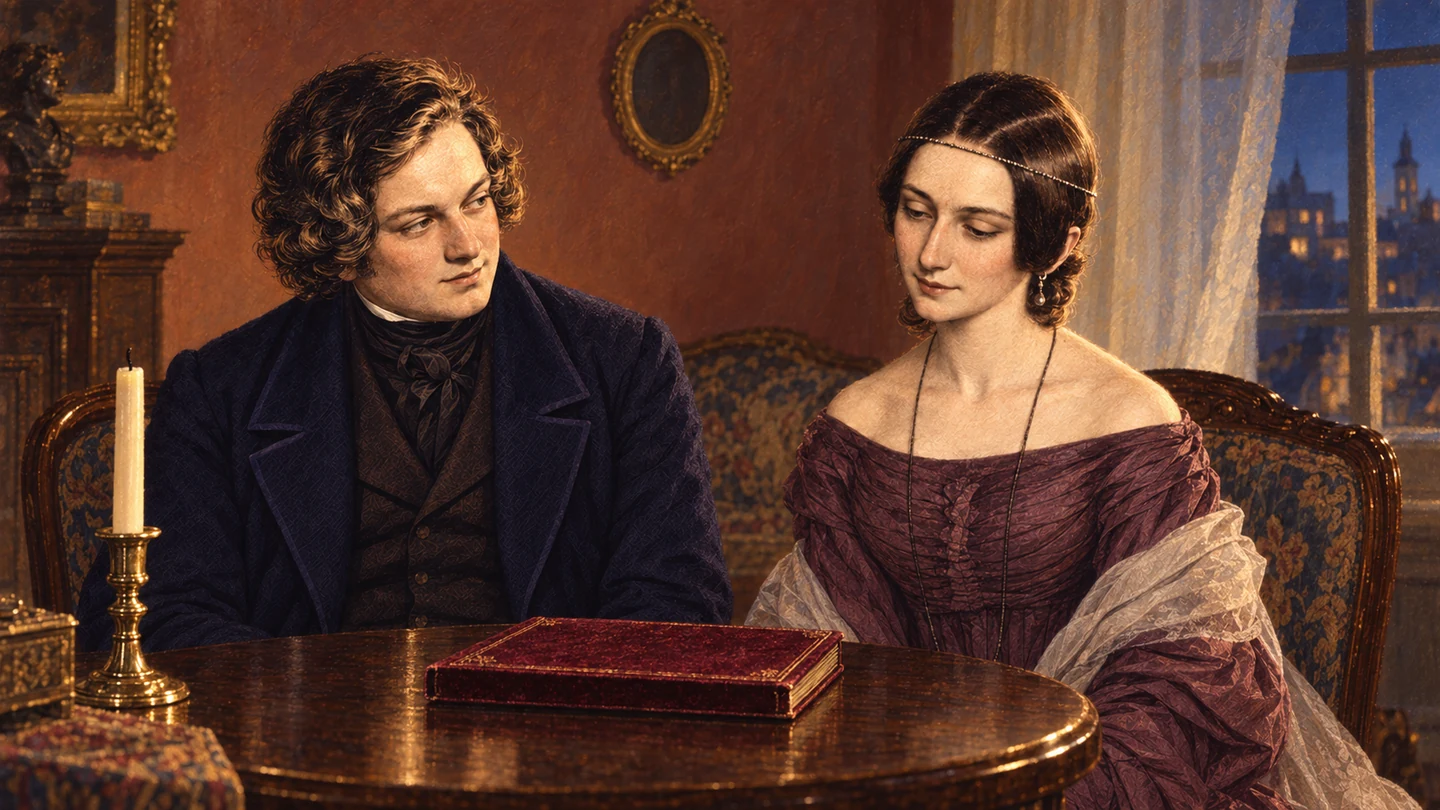
On the evening before the wedding, 11 September, Robert gave Clara a specially bound copy of Myrthen, Op. 25: twenty-six songs in red velvet. The gift had been planned for months. His correspondence with the publisher discusses its presentation and his hopes of having it ready in time. Kazuko Ozawa’s preface to the Henle edition documents the gift and its preparation.
The collection opens with Widmung, meaning Dedication. Schumann set Friedrich Rückert’s love poem for a singer and piano. That is the original form of the music at the heart of this story.
The melody you hear in the film
Our film follows the song into another chapter of its life. The piano performance is Franz Liszt’s later transcription, published as Liebeslied (Widmung), S. 566 in 1848. Liszt lets the piano carry both the singing melody and its accompaniment, then expands the music into a more brilliant climax. Mária Eckhardt’s Henle preface explains the arrangement and its publication.
When you listen, follow the melody through the changing texture. Hear how a single instrument can suggest a voice, answer it in another register, and give it greater intensity. The wedding gift survives in a new musical setting.
Historical notes and sources
The linked chronology, court record and scholarly edition prefaces support the story’s dates and musical history. The illustrated rooms and private moments are artistic reconstructions informed by period portraits. The case cover shown in the film is an archival document; it is not the court’s verdict.
The handwritten Widmung page shown in the full film comes from the Juilliard Manuscript Collection, with photography credited to Ardon Bar-Hama / The Juilliard School. It is a separate manuscript copy, not Clara’s red-velvet wedding album. The later piano score is the 1848 Kistner first edition of Liszt’s transcription, from the Ruth Dana Collection at Juilliard.
Music credit
Robert Schumann / Franz Liszt: Widmung (Liebeslied), S. 566, performed by Takashi Sato, recorded live at Himawari-no-sato Hall, Yokohama, Japan, on 17 April 2009. Recording source: IMSLP #99423. Used under Creative Commons Attribution 3.0 Unported (CC BY 3.0).
For the full film and its Short/Reel adaptation, the recording has been excerpted and edited, with level adjustments and fades, synchronized to the images and mixed beneath narration. This credit and license identify the recording used in the films.